

What Is a Self-Directed Customer?
THE WAY CUSTOMERS INTERACT WITH BUSINESSES HAS FUNDAMENTALLY CHANGED.
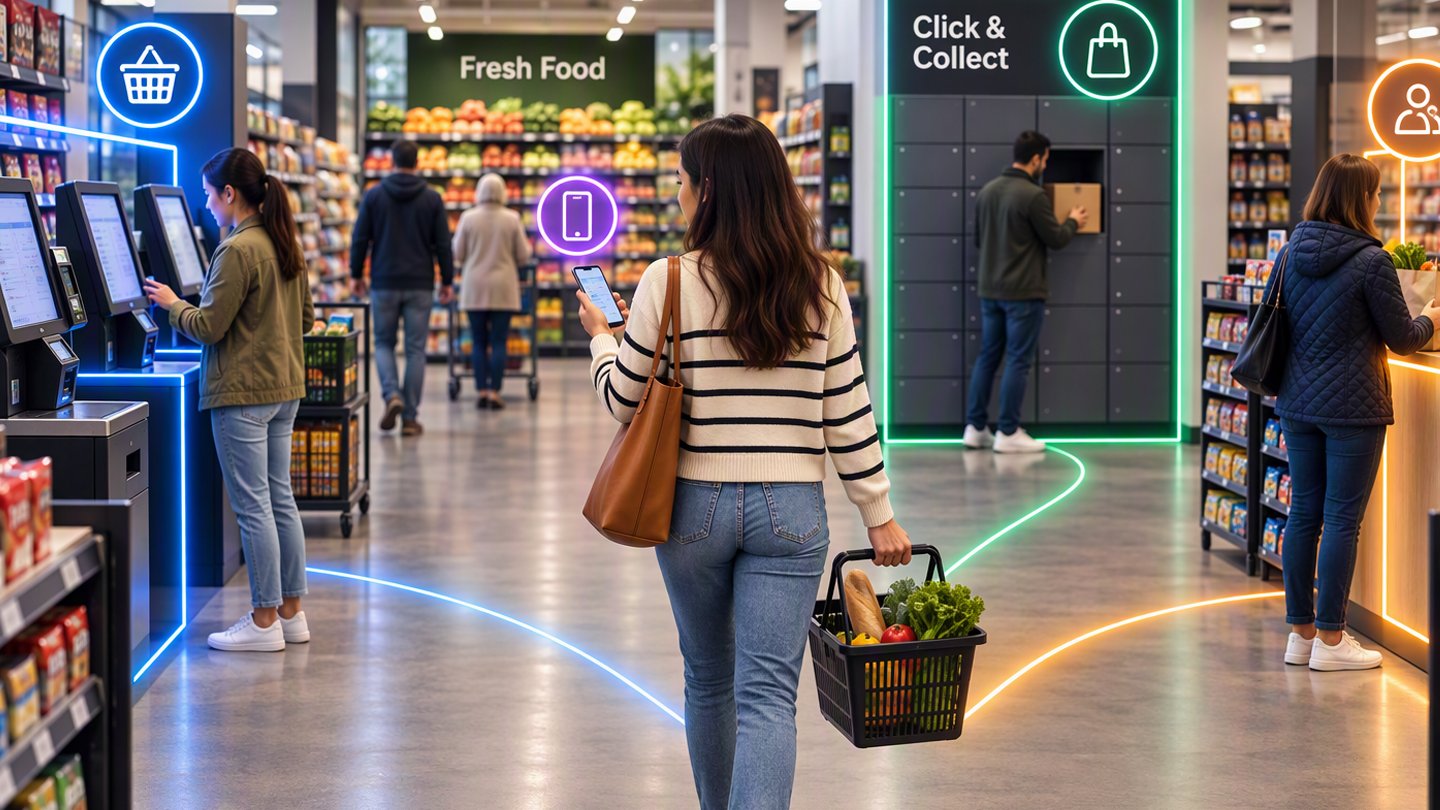
They no longer follow the neat, carefully designed journeys organisations create for them. Instead, they navigate experiences on their own terms, moving between channels, switching between self-service and human assistance, and expecting every interaction to connect seamlessly.
This shift has given rise to a new type of consumer: the self-directed customer.
But what exactly does that mean, and why should organisations care?
Beyond Self-Service
When people hear the term "self-directed customer", they often assume it simply refers to someone who prefers self-service technologies. This is a mistake.
A self-directed customer is not defined by a preference for self-checkout, mobile apps, or online ordering. Instead, they are defined by a desire for control. They want the freedom to decide how they engage, how quickly they move through a journey, and when they want support versus independence.
The critical distinction is this: self-direction is not about removing people from the customer experience. It’s about removing constraints.
Customers want the ability to choose the experience that works best for them at any given moment.
Why Self-Directed Customers Are Emerging
In many ways, organisations created the self-directed customer.
Over the past decade, businesses have invested heavily in making experiences faster, simpler, and more convenient. Digital technologies have made one-click checkouts, real-time tracking, and frictionless mobile payments commonplace. Customers have become accustomed to speed and ease, and those expectations now extend far beyond digital channels.
The challenge is that customers no longer compare businesses against their direct competitors. They compare every experience against the best experience they have had anywhere. If a customer can track a parcel in real time or complete a purchase with a single click in one part of their life, they expect the same level of convenience and flexibility everywhere else.
As a result, customers no longer adapt to business processes. They expect businesses to adapt to them.
The Three Characteristics of a Self-Directed Customer
Self-directed behaviour typically shows up in three important ways.
1. Control
Customers want to determine how they engage. For straightforward, low-complexity interactions, they may prefer speed and independence. For more complex situations, they may want access to expert support. The key is that they want to make that choice themselves.
2. Continuity
Customers expect every interaction to connect seamlessly. They do not want to repeat information, restart journeys, or lose progress as they move between channels. Whether they begin online, continue through a mobile app, or complete a transaction in-store, the experience should feel continuous.
3. Contextual Choice
Customer needs change constantly. The same individual might use self-checkout for a quick purchase, seek staff assistance for a return, and place an online order for collection, all on the same day. Their preferences are not fixed. They are contextual.
Research shows that 80% of consumers consider it important to have a choice of checkout options, highlighting that flexibility, rather than standardisation, increasingly defines a positive experience. (Source: Kantar Profiles Research on behalf of Glory, July 2022)
The Future Is Customer-Directed
The self-directed customer is not a future trend. They are already shaping expectations across retail, hospitality, banking, and beyond. They want control, flexibility, and consistency, and they increasingly reward organisations that provide it.
For organisations willing to embrace that shift, the opportunity is clear. The winners will not be those with the most channels. They will be those that give customers the freedom to choose how those channels work for them.
To get the full story and understand how businesses can respond to the needs of this new type of customer, check out our free ebook:
Never miss the latest blog